


Hungry Shark Evolution
Ubisoft Entertainment
I spent time with Hungry Shark Evolution expecting a quick arcade distraction, but its simple premise has more structure than the first few minutes suggest. You control a shark, search the underwater environment for food, and try to grow into a stronger predator while avoiding situations that can end a run early. The controls are easy to understand, yet the real challenge comes from deciding how aggressively to explore and when survival matters more than chasing a tempting target.
That balance is what makes the game work for short sessions. I can play for a few minutes while waiting somewhere, or stay longer when I want to push farther and work toward the next meaningful improvement. It is a free arcade game from Ubisoft Entertainment, rated Teen, and its large audience is reflected in an average rating of 4.5 from around 7.6 million ratings. Those figures do not replace personal experience, but they do match my impression that this is a polished, familiar mobile game with a very broad reach.
How the first goals pull you into the ocean
The opening loop is immediately readable: eat what you can, stay alive, and look for opportunities to become more capable. I never needed a long tutorial to understand what the game wanted from me. The early goals are useful because they give each run a purpose beyond simply moving around. Even when I failed, I usually understood what had gone wrong: I had taken a risk too early, entered an area I was not ready for, or focused on food while ignoring danger.
Related News
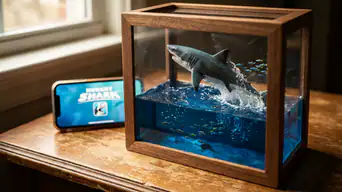
Hungry Shark Evolution: Conquering the Mobile Arcade Seas

Why Block Craft 3D Is Redefining the Mobile Arcade Game
That clarity is important in an arcade game. A complicated progression screen would slow down the experience, but here the action remains the main event. The shark’s movement feels designed for touch controls, with enough freedom to steer around obstacles and pursue prey without making every turn feel like work. I found myself making small decisions constantly rather than following a fixed path. Should I clear nearby food first, investigate a new section, or retreat before the situation becomes unsafe?
The early stage also establishes the game’s central trade-off. Playing cautiously helps preserve a run, but excessive caution limits the rewards and keeps progress slow. Playing boldly can lead to a better session, but it also exposes the shark to threats that are not worth confronting yet. I like that the game teaches this through consequences instead of lengthy explanations. The best early habit is to treat every unfamiliar enemy or environmental hazard as information, not as an invitation to attack immediately.
Related News

Why WhatsApp Messenger Still Makes Everyday Communication Feel Easy

Jurassic World: The Game Is the Better Dino Tycoon for Strategic Players

Threads in Real Life: Who Should Join, Lurk, or Leave

How SHEIN Turned Shopping Into an Endless Content Feed

How to Make Fortnite Feel Smarter on Mobile

Should You Switch to Microsoft Outlook on Mobile?
For a realistic everyday scenario, this works well during a short commute or a break between tasks. I can start a run without needing to remember a complicated story or rebuild a team. If I have only a few minutes, I can focus on nearby targets and stop. If I have more time, I can attempt a deeper push and accept that the run may end because I took a calculated risk. That flexibility is one of its strongest practical qualities.
Progress feels visible without becoming confusing
The most satisfying part of the progression is that improvement is easy to notice during play. As the shark becomes more capable, areas and targets that once felt intimidating become possible to approach. That creates a useful sense of personal learning alongside the character’s growth. I was not only waiting for a stronger shark; I was also becoming better at judging which encounters were sensible.
The game’s evolution theme gives the unlocks a clear emotional purpose. A new shark is not merely another icon in a menu because it changes how I look at the same underwater space. Routes that seemed too dangerous can become practical, while familiar areas remain useful for building confidence and collecting progress. This helps the game avoid the feeling that every run is identical, even though the basic action remains focused on movement, eating, and survival.
Gallery
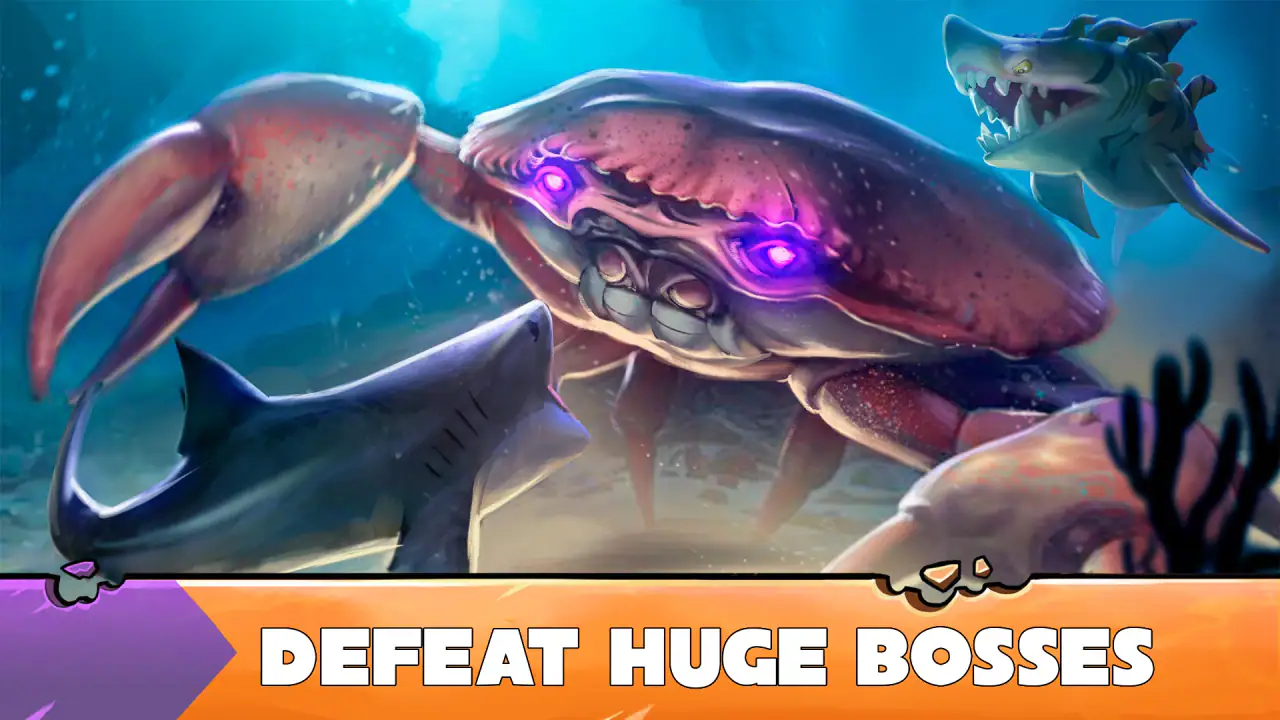
One tip I found valuable is to separate exploration goals from survival goals. When I wanted to discover more of the environment, I accepted that I might end the run sooner. When I was trying to build progress efficiently, I stayed with targets I understood instead of constantly chasing the most exciting option. Mixing those intentions often led to careless decisions. Choosing one purpose before starting made my sessions more consistent.
The progress signals are also strong enough for players who do not want to study detailed statistics. You can feel when a shark is ready for a more ambitious attempt because previously dangerous encounters become less overwhelming. That is a better form of feedback than a number alone. At the same time, players who enjoy carefully optimizing every upgrade may find the presentation less analytical than a traditional role-playing game. This is still an arcade experience first, not a spreadsheet-driven progression simulator.
Challenge rises through judgement rather than complicated controls
The difficulty curve is most interesting when it asks me to manage risk. The controls do not suddenly become difficult to memorize, but the consequences of poor positioning become more serious as I move beyond safe targets. A strong run can fall apart quickly if I become overconfident. That makes restraint an actual skill. The game rewards knowing when to leave an encounter as much as it rewards knowing when to attack.
I especially appreciated that the challenge does not depend entirely on reflexes. Fast reactions help, but awareness matters just as much. I had to watch what was around the shark, keep an escape route in mind, and avoid assuming that every visible target was suitable. This gives the arcade format more depth than a simple score chase. The best sessions felt like a series of small tactical choices rather than one long burst of random movement.
There is a trade-off here for different types of players. If you want a calm aquatic game where exploration is always safe, this may feel too punishing. The shark fantasy is built around danger, and the game expects some failed attempts while you learn the boundaries of your current abilities. On the other hand, if you enjoy games that let you recover from mistakes by trying a different route, the difficulty is motivating rather than unfair.
My practical advice is to resist the urge to treat a newly unlocked capability as permission to challenge everything immediately. Test it on targets that are only slightly beyond your previous comfort zone. This creates a smoother learning curve and protects the progress of a good run. It is also a useful way to tell whether a new shark genuinely changes your options or simply makes familiar encounters faster.
The pacing benefits from this gradual expansion. The game does not need a large narrative twist to keep me interested because the question changes from “Can I survive here?” to “How far can I safely push this time?” That question remains effective as long as the player still has a clear next step. When progress slows, the experience depends more heavily on personal challenge and the satisfaction of improving execution.
Where the retention design helps and where it can press too hard
Because the game is free, it is important to consider how its long-term structure affects the player. The title includes in-app purchases ranging from $0.99 to $99.99 per item. I would approach those options carefully. The core appeal comes from learning the environment and building a better run, so spending can change the pace of progression without necessarily replacing the need to make good decisions.
For me, the healthiest way to play is to treat purchases as optional rather than as part of the basic control loop. I would first decide whether the survival-and-evolution cycle is enjoyable on its own. If it is not, buying a shortcut is unlikely to solve the underlying problem. If it is enjoyable, the free structure gives enough room to decide later whether faster progress is worth the cost. That keeps the choice connected to personal enjoyment instead of impatience.
The retention pressure comes mainly from the desire to see what the next shark or new area will feel like. That is effective because the reward is experiential: I want to test new possibilities, not just fill a progress bar. The risk is that repeated attempts can begin to feel like preparation for the next interesting moment rather than interesting moments themselves. When I noticed that happening, changing my goal helped. I would focus on surviving longer, exploring a different route, or improving my judgement instead of only chasing the next unlock.
Another useful habit is to stop after a poor run rather than immediately trying to recover the lost momentum. Arcade games can encourage automatic restarts, and that is when frustration can turn into rushed decisions or unnecessary spending. Taking a short break made the next attempt feel more deliberate. This is a small point, but it matters for a game built around repeated runs.
The Teen content rating is also worth keeping in mind for families. This is not presented as a gentle educational ocean game; the predator-and-prey premise gives it a more aggressive tone. I would consider the intended audience before installing it for a younger child, even though the controls themselves are approachable. For teens and adults who enjoy action arcade games, the theme is central to the appeal.
How it compares with other arcade choices
Compared with a conventional endless runner, this game gives me more freedom to choose where to move and what to pursue. I am not simply reacting to a track that scrolls toward me. The underwater setting encourages route planning and makes exploration part of the challenge. That makes it a better choice for someone who wants arcade immediacy with a little more environmental decision-making.
Compared with a competitive multiplayer game, it is less dependent on other people and more forgiving of irregular play schedules. I do not need to coordinate with a team or worry about a match ending while I am distracted. The trade-off is that the motivation is more personal. If your favorite part of mobile gaming is outsmarting human opponents, the solitary survival loop may feel limited.
It also differs from a traditional role-playing game. There is progression and a sense of growing power, but the experience does not ask me to manage a large party, follow a complex story, or spend long periods arranging equipment. That simplicity is a strength for quick sessions, although players seeking deep character customization may find the evolution system less elaborate than they want.
Among shark-themed games, the strongest reason to choose this one is the combination of accessible movement and an ongoing sense of escalation. The shark is not just a visual theme placed over a generic arcade system; its appetite, vulnerability, and growth shape the decisions in every run. That specificity is why the game remains recognizable even when the basic objective sounds simple.
Who should play and who should skip it
I would recommend this game to someone who likes short action sessions, visible unlocks, and the feeling of gradually taking on threats that once seemed out of reach. It is particularly suitable for players who enjoy learning through repetition. You can improve by developing better instincts, not only by waiting for a stronger shark. The free entry point also makes it easy to test whether the loop suits you before making any commitment.
I would be more cautious about recommending it to someone who dislikes repeated runs, touch-based movement, or games that place optional purchases alongside progression. The structure can feel repetitive if eating and surviving are not satisfying on their own. It is also not the best choice for a player looking for a story-heavy adventure or a relaxed simulation of marine life. The game uses the ocean as an energetic arcade arena, not as a realistic ecosystem.
Players who need a completely uninterrupted experience should think about the free-to-play structure before settling in for long sessions. The purchase range is wide, and the temptation to speed progress can become part of the experience. I found it more enjoyable when I treated each run as a self-contained challenge and viewed unlocks as a bonus from consistent play rather than a deadline.
Device expectations and long-term value
The current version is 13.7.2, and the game supports devices running Android 6.0 or later. That broad compatibility helps explain why it has reached over 500 million installs. It is an established mobile release rather than a niche experiment, and its long-running presence gives it the feel of a game designed to be returned to rather than completed in one sitting.
Its age also works in two ways. On the positive side, the core idea has had time to become focused: the controls, survival loop, and evolution theme are easy to grasp. On the negative side, players who expect the newest visual style or the most elaborate modern progression systems may find it less ambitious. I would choose it for its dependable arcade loop, not because it tries to imitate a console-scale adventure.
One of the more useful ways to keep it fresh is to alternate between efficiency and experimentation. An efficiency run means staying with familiar targets and protecting the session. An experimentation run means testing a route, enemy, or area that may be beyond the safest option. Keeping those modes separate prevents every attempt from becoming the same cautious routine and gives the progression more meaning.
I also recommend judging a new shark by the situations it opens up, not just by how quickly it handles familiar food. The real value of an unlock is whether it changes your route choices or lets you approach a previously intimidating part of the map with a plan. That perspective makes the progression feel more substantial and helps avoid chasing upgrades simply because they are new.
My verdict on the progression and pacing
Hungry Shark Evolution succeeds because its goals are easy to understand but not entirely automatic. Eating, surviving, exploring, and evolving connect naturally, while the difficulty encourages judgement instead of relying only on faster reactions. The pacing is strongest when each run gives me a modest objective and the next unlock feels close enough to motivate another attempt without making the current shark feel useless.
Its limitations are equally clear. Repetition can become noticeable, optional purchases may add pressure for players who want rapid progress, and the experience is not designed for people seeking a deep story or complex management. The game is at its best when I accept its arcade identity and play in focused bursts rather than expecting a full-scale adventure.
Ubisoft Entertainment has built a game that remains approachable while giving careful players room to improve. I like that failure usually teaches me something about risk, positioning, or timing. I also like that progress changes how I read the underwater environment instead of merely adding a larger number to a screen.
My final recommendation is simple: try it if the idea of growing from a vulnerable predator into a more capable shark sounds satisfying, and decide early whether you enjoy the free progression at its natural pace. The best part is not merely unlocking a bigger shark; it is learning when that new strength is genuinely safe to use. For quick arcade sessions with a clear evolution path, it is an easy game to recommend, provided you are comfortable with repeated runs and the presence of optional in-app purchases.
FAQs for Hungry Shark Evolution
What is the main objective of Hungry Shark Evolution?
In Hungry Shark Evolution, players control a shark navigating through an ocean environment. The main objective is to survive as long as possible by eating other marine creatures, completing missions, and collecting coins and gems. As you progress, you can upgrade your shark or unlock new, more powerful species to enhance your gameplay.
Is Hungry Shark Evolution free to play?
Hungry Shark Evolution is free to download and play on both Android and iOS platforms. However, the game offers in-app purchases, which include items like special sharks, currency packs, and other power-ups. These can enhance your gaming experience but are not necessary to enjoy the core gameplay.
What types of sharks can I unlock in the game?
The game offers a variety of sharks you can unlock, ranging from the initial Reef Shark to the powerful Megalodon. Each shark has unique abilities and stats that affect gameplay, such as speed, bite, and boost. Unlocking these sharks typically requires coins or gems, which can be earned through gameplay or purchased.
Are there any offline gameplay options available?
Yes, Hungry Shark Evolution can be played offline, making it a convenient option for players without a constant internet connection. However, certain features like leaderboard updates and in-app purchases will require an internet connection to function properly.
How does the game handle updates and new content?
Hungry Shark Evolution frequently receives updates that introduce new content, such as additional sharks, missions, and special events. These updates help keep the game fresh and engaging for players. Make sure your device is connected to the internet to download the latest updates and enjoy all the new features.
Pros
- Stunning graphics with vibrant ocean environments.
- Intuitive controls make gameplay smooth and engaging.
- Regular updates with new features and sharks.
- Offline mode available for uninterrupted play.
- Variety of shark species to evolve and upgrade.
Cons
- In-app purchases can be quite expensive.
- Repetitive gameplay may become monotonous.
- Occasional ads can disrupt the experience.
- Limited missions can feel repetitive quickly.
- Requires significant storage space on devices.


